
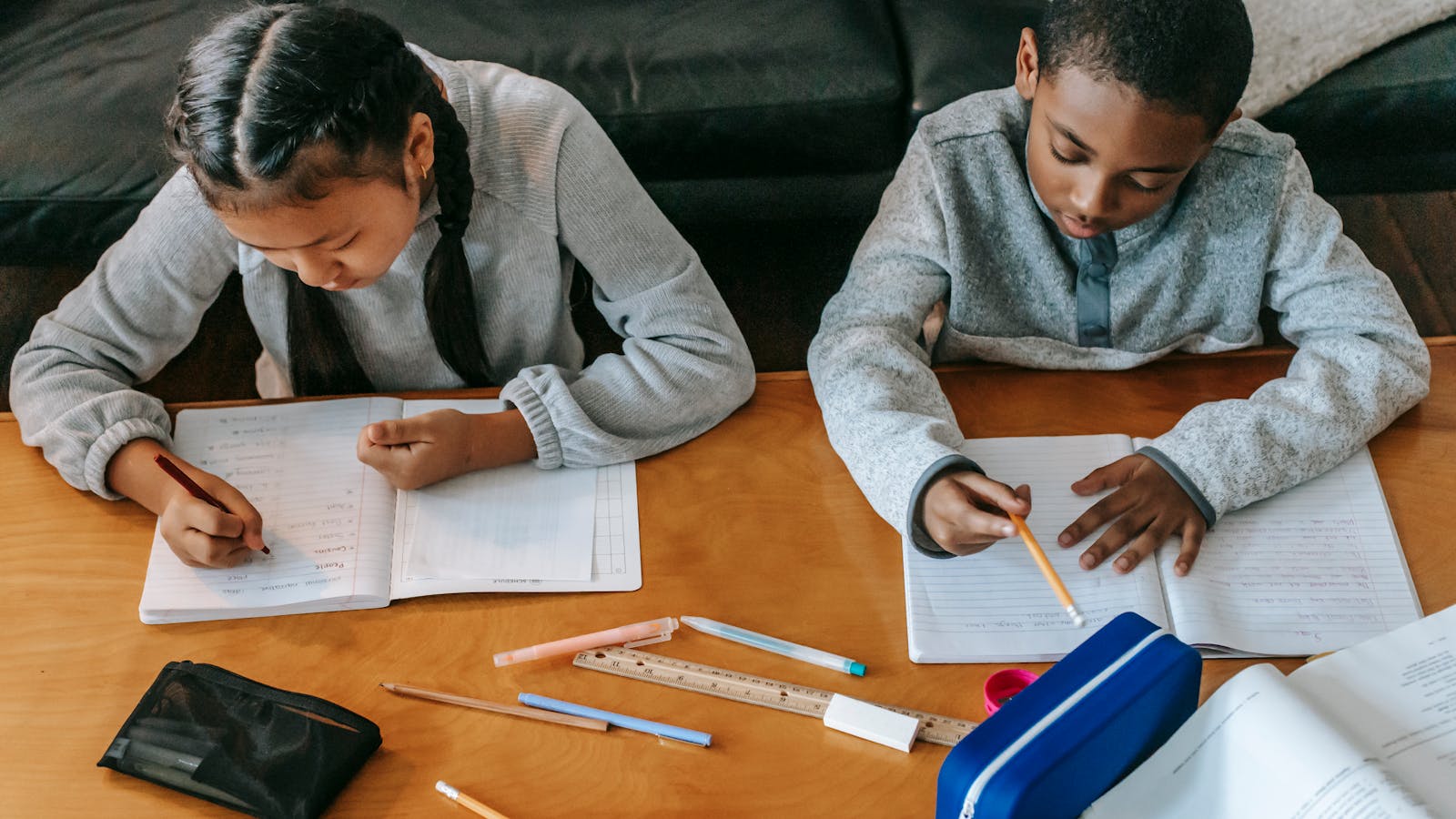
Many homework struggles are blamed on motivation when the real problem is setup. If kids have to search for pencils, work in a noisy spot, or clear a pile of unrelated clutter before they can begin, starting homework feels harder than it should.
A homework station does not need to be fancy. It just needs to remove friction.
What a Homework Station Should Do
At minimum, the space should make it easier to:
- begin quickly
- find supplies
- stay reasonably focused
- finish and put materials away
That is it. It is not about creating a magazine-worthy study nook.
Choose the Right Location for Your Child
Some children do best in the middle of family activity, like the kitchen table. Others get distracted by every conversation and need a quieter corner.
The best location depends on whether your child needs:
- accountability and visibility
- quiet and fewer interruptions
- easy access to an adult for questions
Do not assume every child needs a desk in a bedroom. Many do better in a shared space.
Stock the Basics
Keep the station simple and consistent:
- pencils and pens
- eraser
- scissors
- ruler
- charger if needed
- paper or notebook
- a small tray for school forms
If the basic tools live somewhere else, homework starts with a scavenger hunt.
Control Visual Clutter
A homework station should feel usable the moment a child sits down. That means clearing unrelated objects from the space as much as possible.
Visual clutter quietly competes for attention. A cleaner surface signals, “This is where this task happens.”
You do not need empty minimalist perfection. You just need fewer distractions than the rest of the house.
Make the Next Step Obvious
Children are more likely to start work when they know exactly what to do first.
Helpful supports include:
- a simple after-school checklist
- a basket for papers that need action
- a spot to place completed work
- a timer for work blocks
This reduces the “I don’t know where to start” feeling that often shows up as stalling.
Plan for Device Use Intentionally
If homework involves a laptop or tablet, decide in advance how that device will be used. Recreational tabs, notifications, and game access can quickly pull kids off task.
You may want:
- device charging at the station
- headphones for school videos
- a rule that only school tabs stay open
- parent visibility during homework time
The structure matters more than the device itself.
Pair the Space With a Routine
The station works best when it is part of a broader after-school sequence:
- arrive home
- snack
- homework
- chores
- free time
When the order is consistent, kids stop renegotiating when homework happens.
Review What Is Not Working
If the space is still not being used well, ask practical questions:
- is the chair uncomfortable?
- are supplies always running out?
- is the room too noisy?
- does the child need more support nearby?
- is homework happening too late in the evening?
Small adjustments often matter more than a total redesign.
A good homework station lowers the cost of getting started. That alone can turn a tense after-school hour into something much more manageable for both parents and kids.