
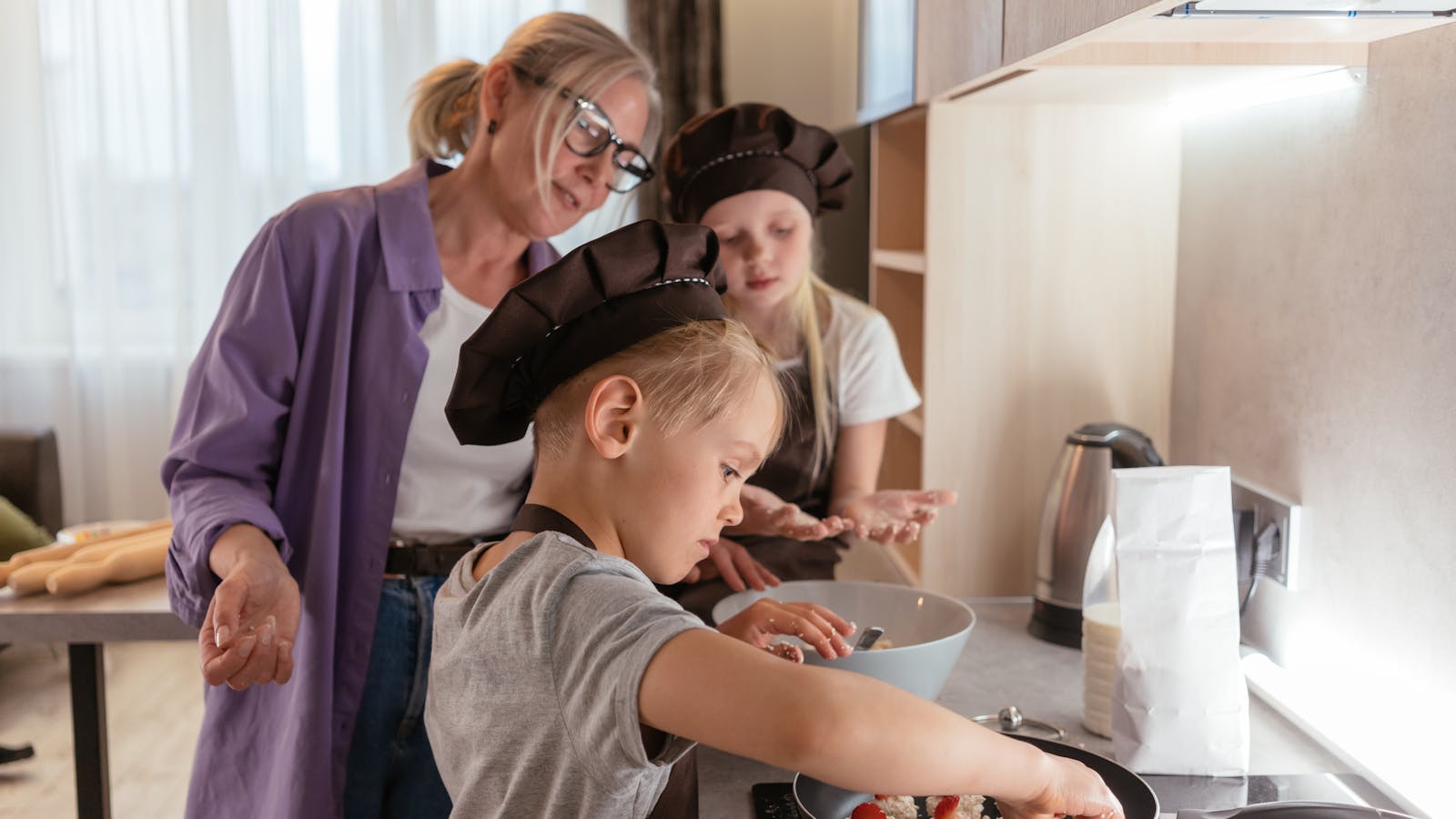
Responsibility is not something kids are born with. It is a skill that develops over time through practice, guidance, and real-world experience. And one of the most accessible classrooms for teaching it is right inside your own home.
Household tasks give children something that lectures and reminders never can: a tangible sense of contribution and competence. When a child sets the table, folds their own laundry, or feeds the family pet, they learn that their actions matter and that other people are counting on them.
The Developmental Benefits Are Real
Research consistently shows that children who participate in household tasks develop stronger executive functioning skills, better self-regulation, and higher self-esteem. A well-known longitudinal study from the University of Minnesota found that the best predictor of success in young adulthood was whether children had participated in household tasks beginning at age three or four.
This makes sense when you think about what chores actually require. A child who is responsible for emptying the dishwasher must remember the task, initiate it without being told, sequence the steps, and see it through to completion. Those are the same executive functioning skills they need for schoolwork, sports, and eventually their careers.
Starting Small: Age-Appropriate Tasks
The biggest mistake parents make is waiting too long to involve kids. Toddlers are naturally eager to help. Channel that enthusiasm early, even if their "help" creates more work for you initially.
Ages 2-3: Put toys in a bin, place dirty clothes in a hamper, wipe up small spills with a cloth, help feed pets.
Ages 4-5: Make their bed (it will not be perfect, and that is fine), set the table with guidance, water plants, sort laundry by color.
Ages 6-8: Load and unload the dishwasher, sweep floors, take out trash, pack their own lunch with supervision, tidy their room independently.
Ages 9-11: Cook simple meals, do their own laundry start to finish, clean bathrooms, vacuum, mow the lawn with supervision.
Ages 12+: Plan and cook family meals, manage their own schedule, handle yard work independently, babysit younger siblings for short periods.
The key is gradually increasing complexity and independence as kids demonstrate readiness.
Ownership vs. Compliance: The Critical Difference
There is a significant difference between a child who does a task because they will get in trouble if they do not, and a child who does a task because they understand it is their contribution to the family. The first is compliance. The second is ownership.
Compliance-based approaches rely on external pressure: rewards, punishments, and constant reminders. They work in the short term but crumble the moment the external pressure disappears. Ownership-based approaches build internal motivation that lasts.
Here is how to foster ownership:
Explain the why. Instead of "Go clean your room," try "When your room is tidy, you can find things more easily and it is a nicer space to relax in. Plus, it helps our whole house feel calmer." Kids are more motivated when they understand the purpose behind a task.
Give choices. Let kids choose which tasks they take on from a list of options. When they have a say, they feel more invested. You might use a tool like Treehouse to let kids pick from available tasks each week, giving them agency while ensuring everything gets covered.
Use "we" language. Frame household tasks as a team effort. "We all live here, so we all take care of our home" is more motivating than "These are your chores."
Avoid redoing their work. If your child makes the bed and it is lumpy, resist the urge to fix it. Redoing their work sends the message that their effort was not good enough, which kills motivation fast.
The Power of Natural Consequences
Natural consequences are one of the most effective teaching tools available to parents, and they require almost no effort on your part.
If your child forgets to put their dirty uniform in the hamper, they wear a wrinkled one to practice. If they do not pack their lunch, they eat whatever the school cafeteria offers. If they neglect to charge their tablet, it dies mid-movie.
Natural consequences work because they are logical, impersonal, and immediate. There is no lecture needed. The situation itself teaches the lesson.
Of course, use judgment here. Natural consequences should never put a child in danger or cause disproportionate harm. But for everyday responsibilities, letting reality be the teacher is remarkably effective.
Building Intrinsic Motivation
External rewards like sticker charts and allowances can jumpstart a new habit, but the goal is to eventually move beyond them. Intrinsic motivation, doing something because it feels good or meaningful, is far more durable.
You build intrinsic motivation by helping kids notice how responsibility feels. After they complete a task, ask questions like:
- "How does it feel to have that done?"
- "Did you notice how much smoother dinner went because you set the table early?"
- "Your sister was really happy you helped her. How did that feel?"
Over time, kids begin to associate responsibility with positive internal feelings rather than external rewards.
Celebrating Effort, Not Perfection
Perfectionism is the enemy of responsibility. If kids feel they will be criticized for doing a task imperfectly, they will avoid the task altogether. Focus your feedback on effort and improvement, not on flawless execution.
Instead of "You missed a spot on the counter," try "Thanks for wiping down the kitchen. You are getting faster at it." Instead of "That is not how you fold towels," try "I appreciate you tackling the laundry. Want me to show you a trick that makes folding faster?"
This approach keeps kids willing to try, willing to fail, and willing to improve, which is the entire foundation of responsibility.
When Kids Resist (And They Will)
Resistance is normal and does not mean your approach is failing. Stay calm, stay consistent, and avoid turning chores into power struggles.
Set clear expectations in advance. Make sure tasks are genuinely age-appropriate. Pair difficult tasks with more enjoyable ones. And remember that some resistance is actually a sign of developing autonomy, which is ultimately what you want.
The child who pushes back on chores at ten but learns to manage them anyway is the teenager who can handle a part-time job and the adult who keeps their own household running.
The Long Game
Teaching responsibility through household tasks is not about having a spotless house or getting free labor. It is about raising capable, confident humans who understand that their contributions matter. Every sock they fold, every dish they wash, and every pet they feed is a small investment in who they are becoming.
Start where you are. Start small. And give it time. The results are worth it.